

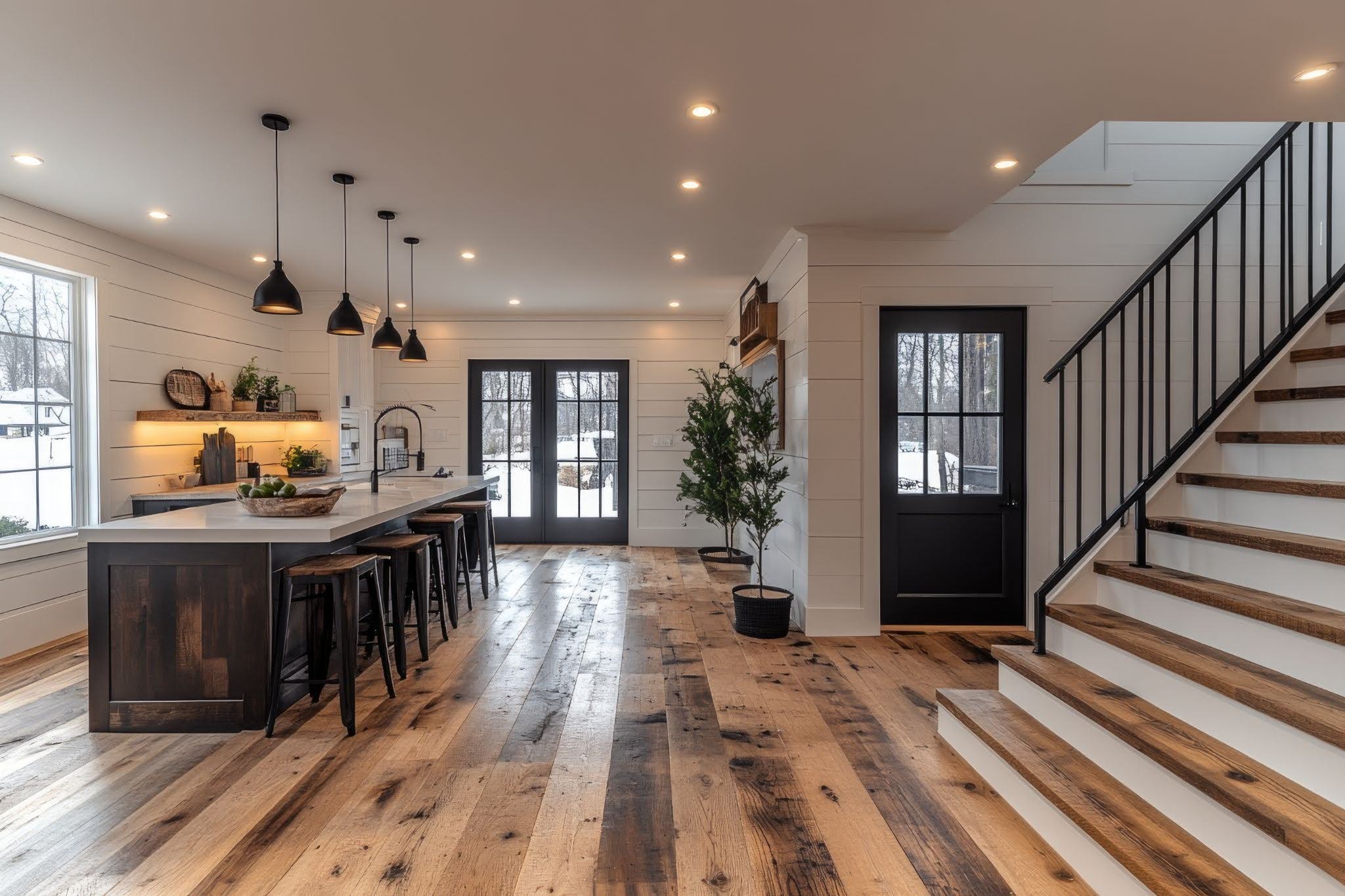
Choosing between engineered hardwood and solid hardwood can feel confusing, especially in a climate like Olympia’s. At Abbey Capitol Floors & Interior, we help homeowners every day navigate this decision by looking beyond surface appearance and focusing on performance, stability, and long-term value. While both options offer the beauty of real wood, they behave very differently depending on where and how they’re installed.
This guide explains when engineered hardwood is the smarter choice, when solid wood still shines, and how to decide what works best for your Olympia home. Visiting our showroom to compare samples side by side and scheduling free in-home measuring and estimates can make the decision far more straightforward.
Engineered vs. Solid Hardwood: Construction and Stability Differences
The biggest difference between engineered and solid hardwood lies beneath the surface. Solid hardwood planks are made from a single piece of wood from top to bottom. This gives them a traditional feel and allows for multiple refinishing cycles over their lifetime. However, solid wood naturally expands and contracts with changes in humidity.
Engineered hardwood is constructed with a real wood veneer on top of multiple layered cores designed for stability. This layered construction helps engineered planks resist movement caused by moisture and humidity changes. In Olympia, where seasonal moisture levels fluctuate, that added stability can make a noticeable difference in long-term performance.
Seeing the construction differences up close in our showroom helps homeowners understand why engineered hardwood often behaves better in challenging environments.
Best-Use Cases for Engineered Hardwood in Olympia Homes
Engineered hardwood excels in areas where solid wood may struggle. Homes built on concrete slabs are a prime example. Engineered flooring installs more reliably over concrete, while solid hardwood typically requires additional preparation or isn’t recommended at all.
Below-grade spaces such as basements benefit from engineered hardwood’s stability, especially in homes where moisture levels vary throughout the year. Wider plank designs are also more forgiving in engineered formats, as solid wide planks are more prone to movement. If your home experiences noticeable humidity swings between seasons, engineered hardwood often delivers more consistent results.
A free in-home measuring and estimate allows our team to evaluate your subfloor, moisture conditions, and layout to confirm whether engineered or solid hardwood is the better fit.
Wear Layer Basics and Refinishing Potential
One common question homeowners ask is whether engineered hardwood can be refinished. The answer depends on the thickness of the wear layer, which is the real wood veneer on top. A simple rule of thumb is that thicker wear layers allow for more refinishing potential, while thinner layers may only support light sanding or none at all.
Solid hardwood typically offers the most refinishing flexibility over decades of use. Engineered hardwood trades some refinishing potential for greater stability. Understanding this balance helps set realistic expectations for long-term maintenance. Our showroom team can walk you through wear layer differences so you know exactly what you’re getting.
Installation Methods and How They Affect Cost and Comfort
Installation methods also differ between engineered and solid hardwood. Engineered hardwood offers more flexibility, including floating, glue-down, or nail-down installations depending on the product and subfloor. Floating installations can add comfort underfoot and reduce installation time in some situations.
Solid hardwood is most often nailed down, which can increase labor requirements and limit where it can be installed. Installation method influences not only cost but also sound control and overall comfort. During a free in-home measuring and estimate, we can explain which installation methods are suitable for your home and how they affect performance.
Style Guidance for Pacific Northwest Homes
From a design perspective, engineered and solid hardwood can look nearly identical once installed. In Olympia homes, popular styles often lean toward wider planks, subtle textures, and natural finishes that reflect the Pacific Northwest’s relaxed aesthetic.
Textured surfaces such as wire-brushed or lightly distressed finishes help hide everyday wear while complementing modern and transitional interiors. Neutral and warm wood tones continue to be popular, pairing well with natural light and regional design trends. Visiting our showroom allows you to compare plank widths, textures, and tones under realistic lighting conditions.
When Solid Hardwood Still Makes Sense
Solid hardwood remains a great option for homeowners who prioritize long-term refinishing potential and are installing above grade in controlled environments. If your home has stable indoor humidity and traditional room layouts, solid hardwood can be a lasting investment. The key is matching the product to the environment rather than choosing based on appearance alone.
Make the Right Hardwood Choice with Confidence
Engineered hardwood often beats solid wood in Olympia homes where moisture, concrete subfloors, or wider planks are factors. Solid hardwood still has its place when conditions are right and refinishing longevity is a top priority. The best choice depends on your home’s structure, lifestyle, and design goals.
At Abbey Capitol Floors & Interior, we’re here to help you evaluate every detail. Visit our showroom to compare engineered and solid hardwood samples side by side, and take advantage of our free in-home measuring and estimates to assess subfloor conditions and moisture levels before making your final decision.


